

Professional ServicesThe Edmonton Down Syndrome Society offers an array of professional services; please contact our Director of Community & Family Services for any questions about these services or to book an intake Email for questions or to book an intake |
 |
 Occupational TherapyOccupational therapists (OT) work with individuals across the lifespan to increase their independence in activities. These everyday activities are a person’s “occupations” and include sleep, hygiene, dressing, cooking, self-feeding, employment, transportation, attending school, and toileting. OTs are also able to recommend accommodations or modifications to activities or the environment to improve the ability to participate in an occupation.
|
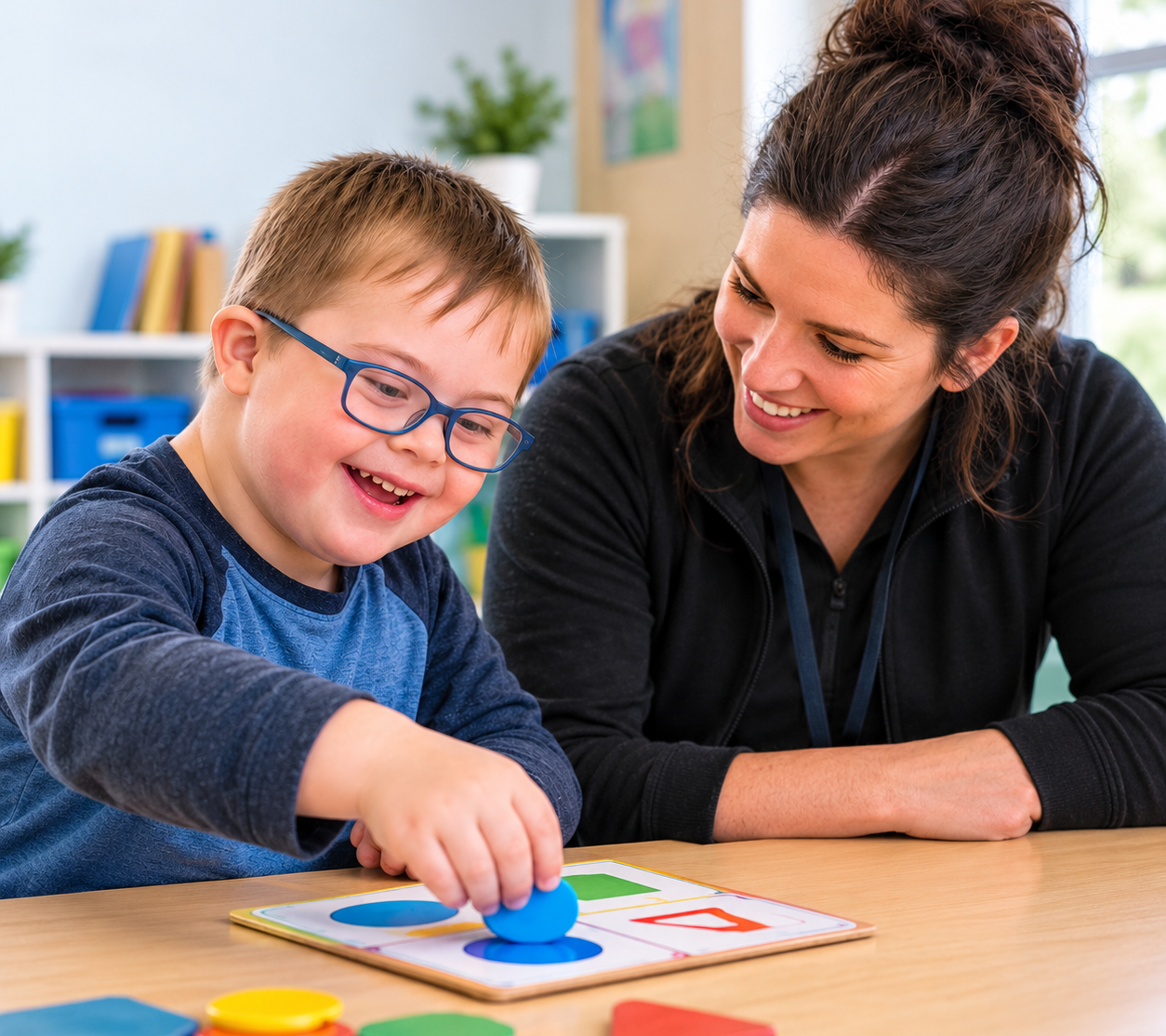 Behavioural TherapyBoth children and adults can benefit from behavior therapy, including individuals who have a dual diagnosis (e.g., autism spectrum disorder, attention deficit disorder). People with Down syndrome may become frustrated because of difficulty communicating, may develop compulsive behaviors, and may have attention-deficit/hyperactivity disorder and other health issues. Behavioral therapies work to find useful responses to both desirable and undesirable behaviors. These types of therapists try to understand why a child is acting out, create ways and strategies for avoiding or preventing these situations from occurring, and teach better or more positive ways to respond to situations. Parents may also benefit from guidance on how to help a child with Down syndrome manage day-to-day challenges and reach his or her full potential. Support is provided in a variety of settings such as home, school, and the community. The changes in hormone levels that adolescents experience during puberty can cause them to become more aggressive. Behavioral therapists can help teenagers recognize their intense emotions and teach them healthy ways to reach a feeling of calmness. |
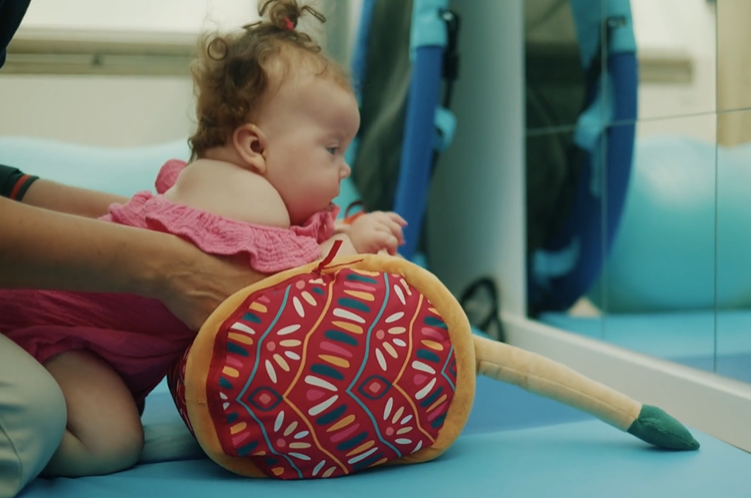 Physical TherapyPhysical therapists (PT) work with people born with Ds from infancy through adulthood. They help them function as independently as possible during different phases of life. Because of certain physical characteristics, which include hypotonia (low muscle tone), ligamentous laxity (looseness of the ligaments that causes increased flexibility in the joints), and decreased strength, individuals with Down syndrome don’t always develop motor skills in the same way typically developing individuals do. Physical therapists help people with Ds gain strength and enjoy movement to benefit their overall health. Physical therapists are movement experts. They improve quality of life through hands-on care, patient education, and prescribed movement. The goal of physical therapy is to encourage the development of the best movement patterns. This means helping the person develop:
|
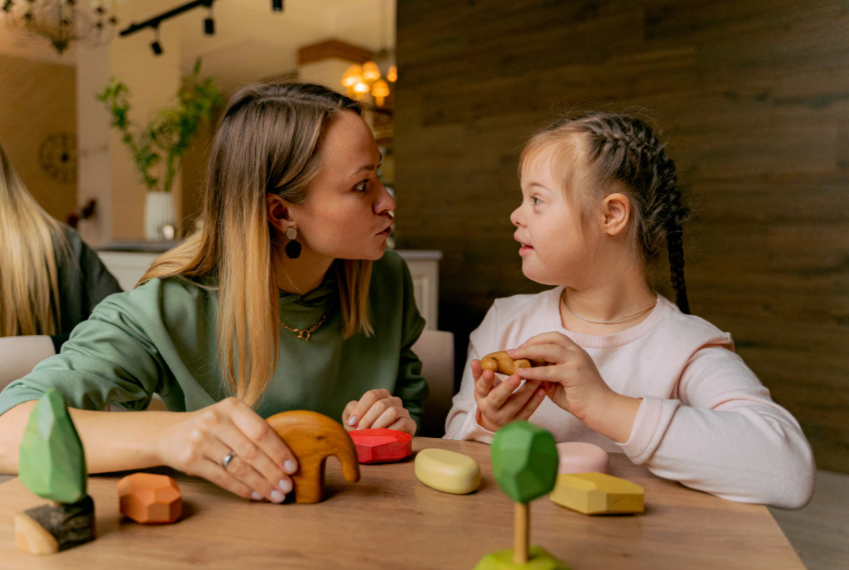 Speech Language TherapySpeech-language therapists can help children with Down syndrome improve their communication skills and use language more effectively. Children with Down syndrome often learn to speak later than their peers. A speech-language therapist can help them develop the early skills necessary for communication, such as imitating sounds. In many cases, children with Down syndrome understand language and want to communicate before they can speak. A speech-language therapist can help a child use alternate means of communication, such as sign language and pictures, until he or she learns to speak. Learning to communicate is an ongoing process, so a person with Down syndrome may also benefit from speech and language therapy in school, as well as later in life. The therapist may help with conversation skills, pronunciation skills, comprehension, and learning and remembering words. |
|
|
Some of the communication difficulties that people with Down syndrome may experience include:
|
|
These difficulties can make it challenging for people with Down syndrome to communicate with friends, family, and caregivers. Some benefits of speech therapy may include:
|
|
We believe in offering the best services possible to our community. If you are interested in booking an appointment with one of our professionals please reach out to our Director of Community & Family Services Julie Boucher julie@edss.ca.